
February 24th marked the 25th anniversary of the Durban Declaration and Program of Action (DDPA), an important framework for dismantling racism, racial discrimination, xenophobia and related intolerance. Adopted in 2001 at the United Nations (UN) World Conference hosted by South Africa, it calls on civil society and states to recognize colonialism and apartheid’s profound damages and to work to prevent and dismantle their modern forms.
Preceding the DPPA, South Africa was the site of other significant milestones that contributed to struggles against colonialism and racism. The movement for freedom from the apartheid regime brought a new era of democratic transformation in South Africa. In addition, the liberation movement’s successful struggle to codify apartheid as a crime against humanity was a key contribution to the international legal framework to fight impunity for the gravest crimes and rights violations.
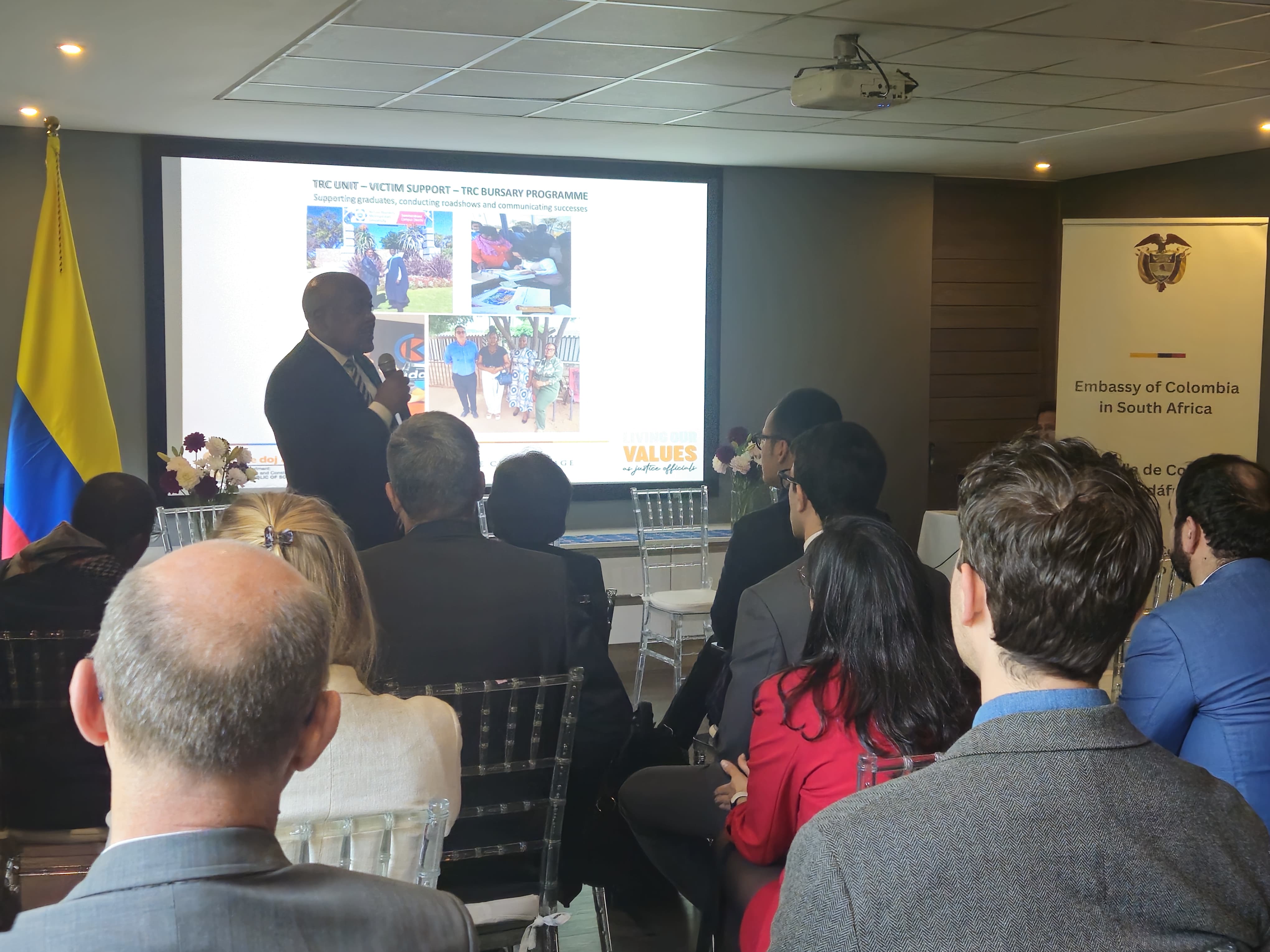
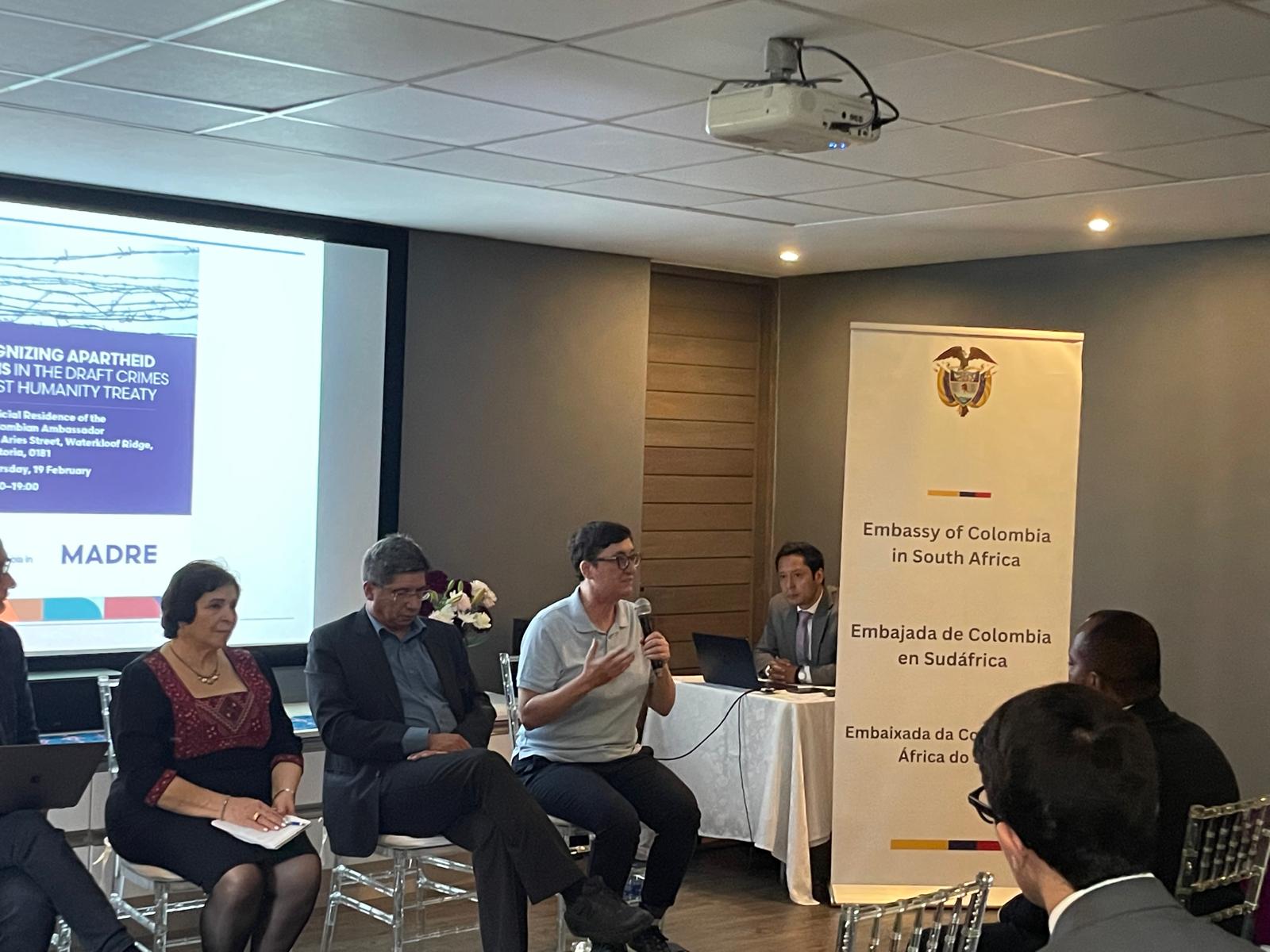
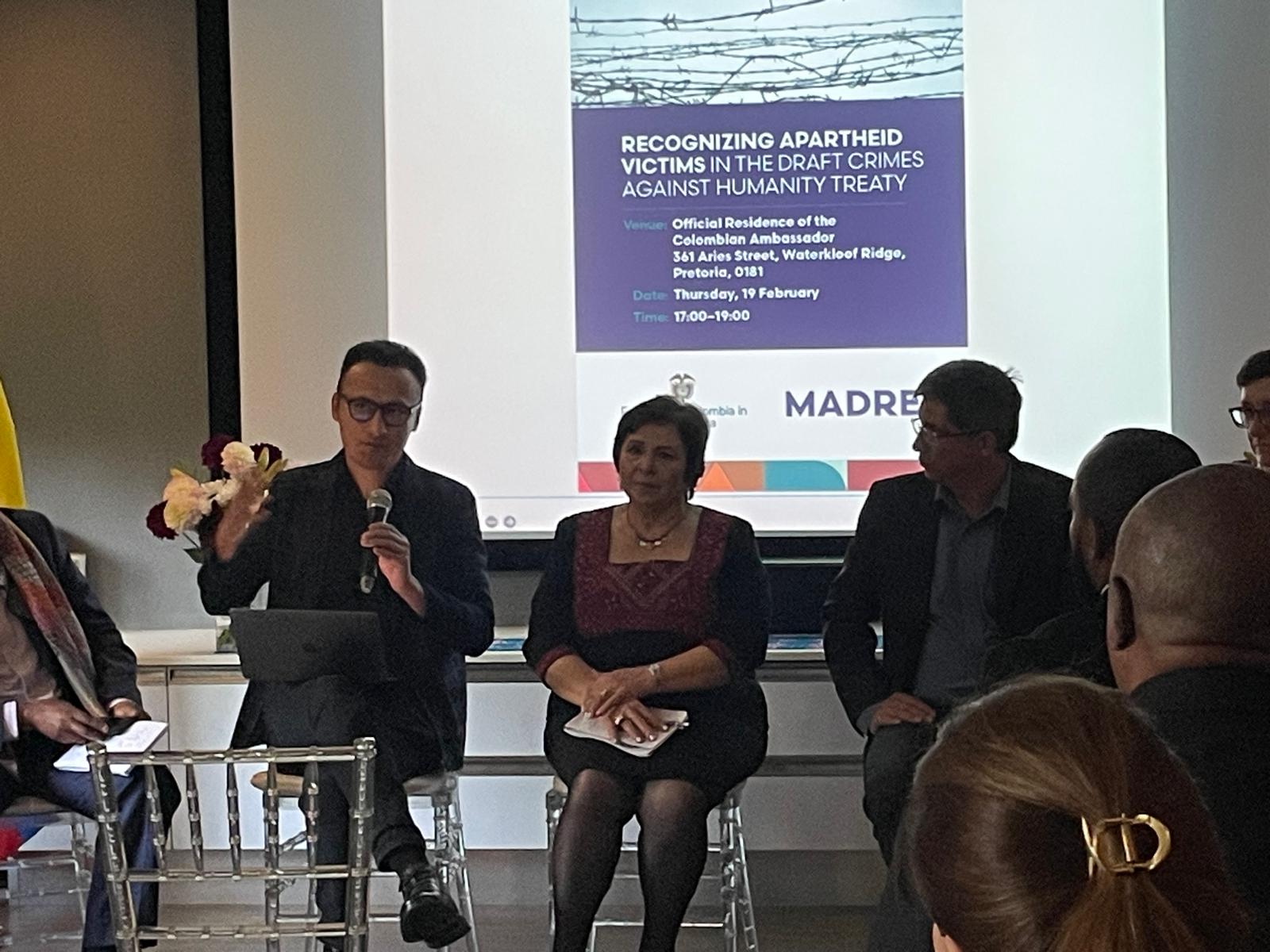
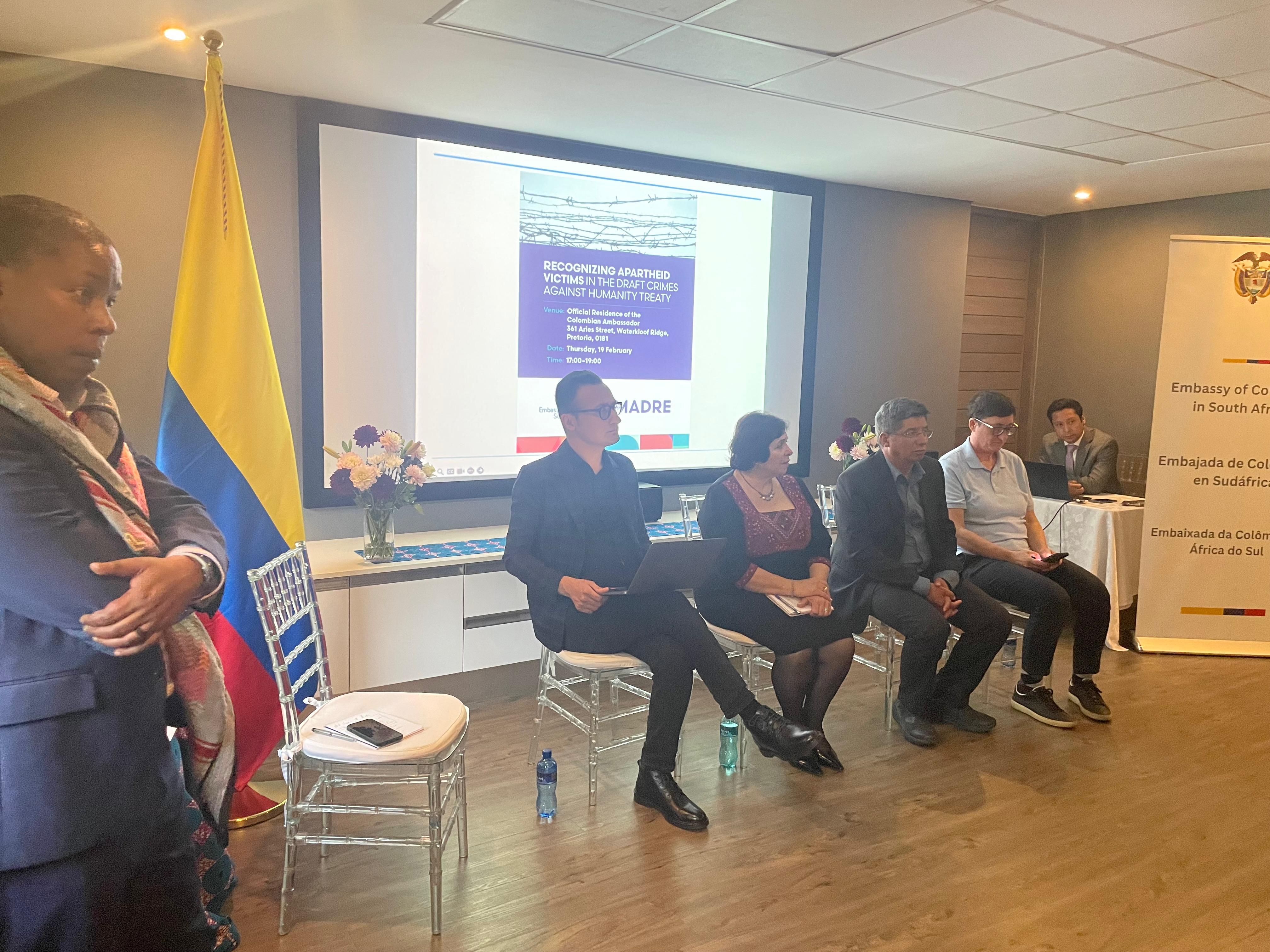
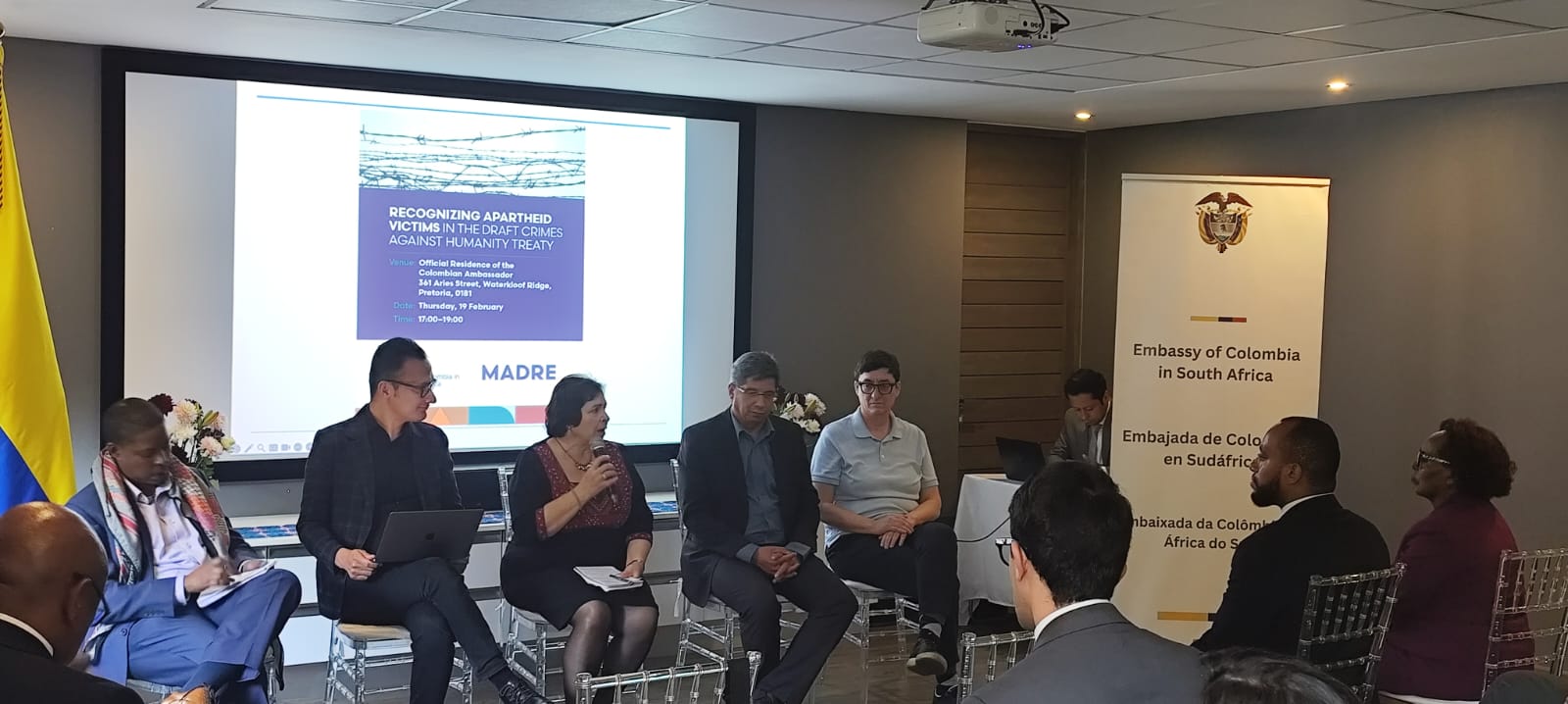
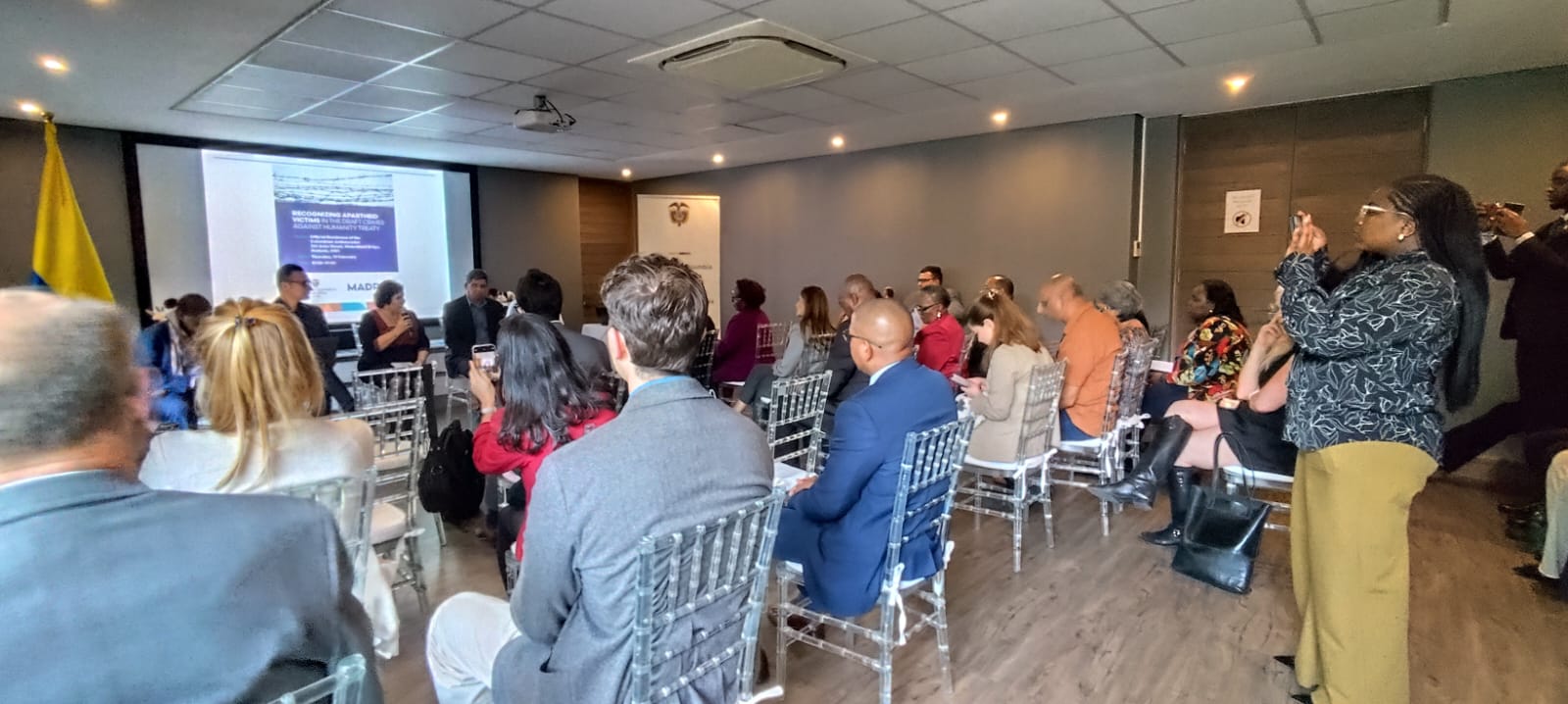
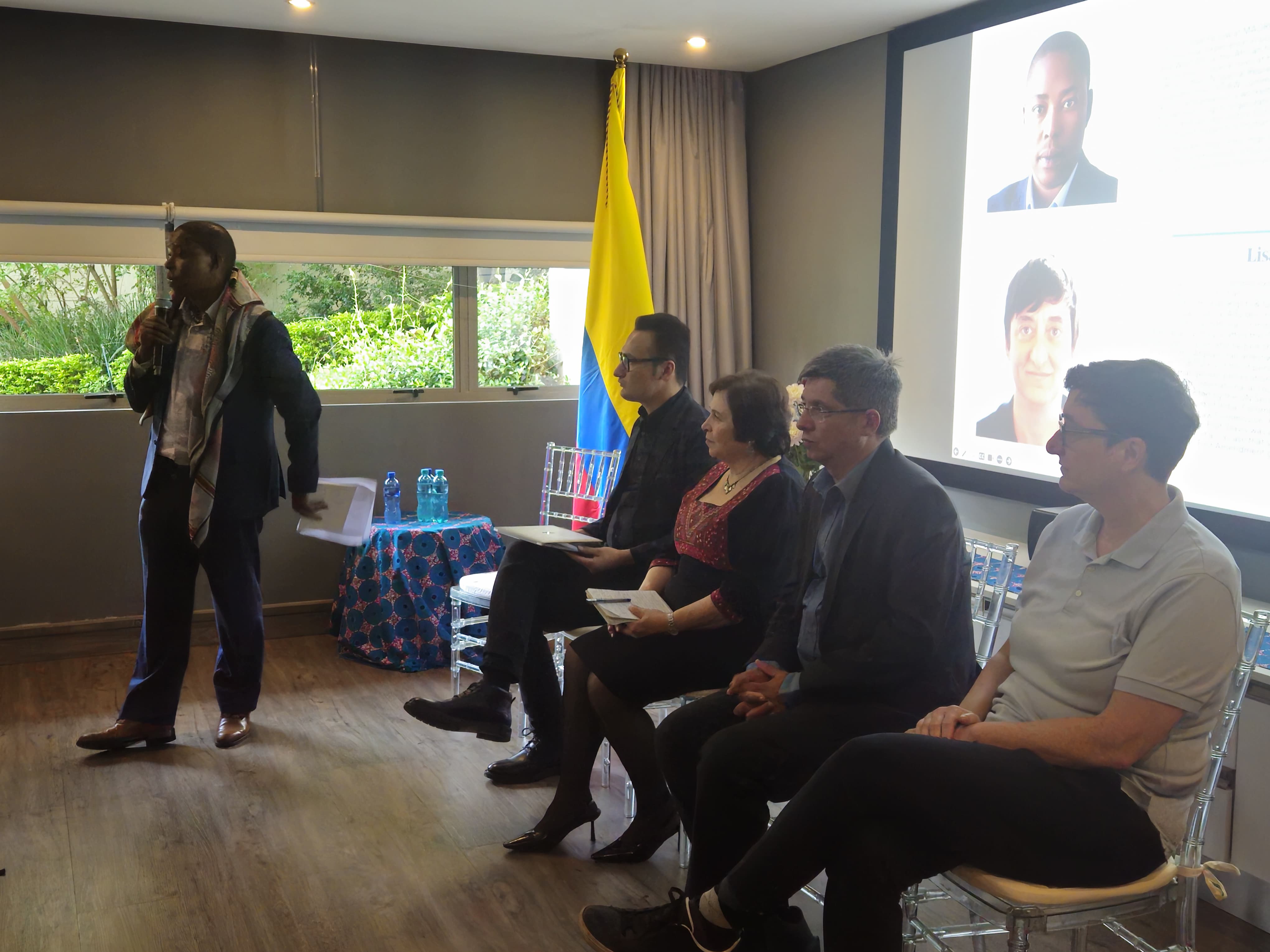
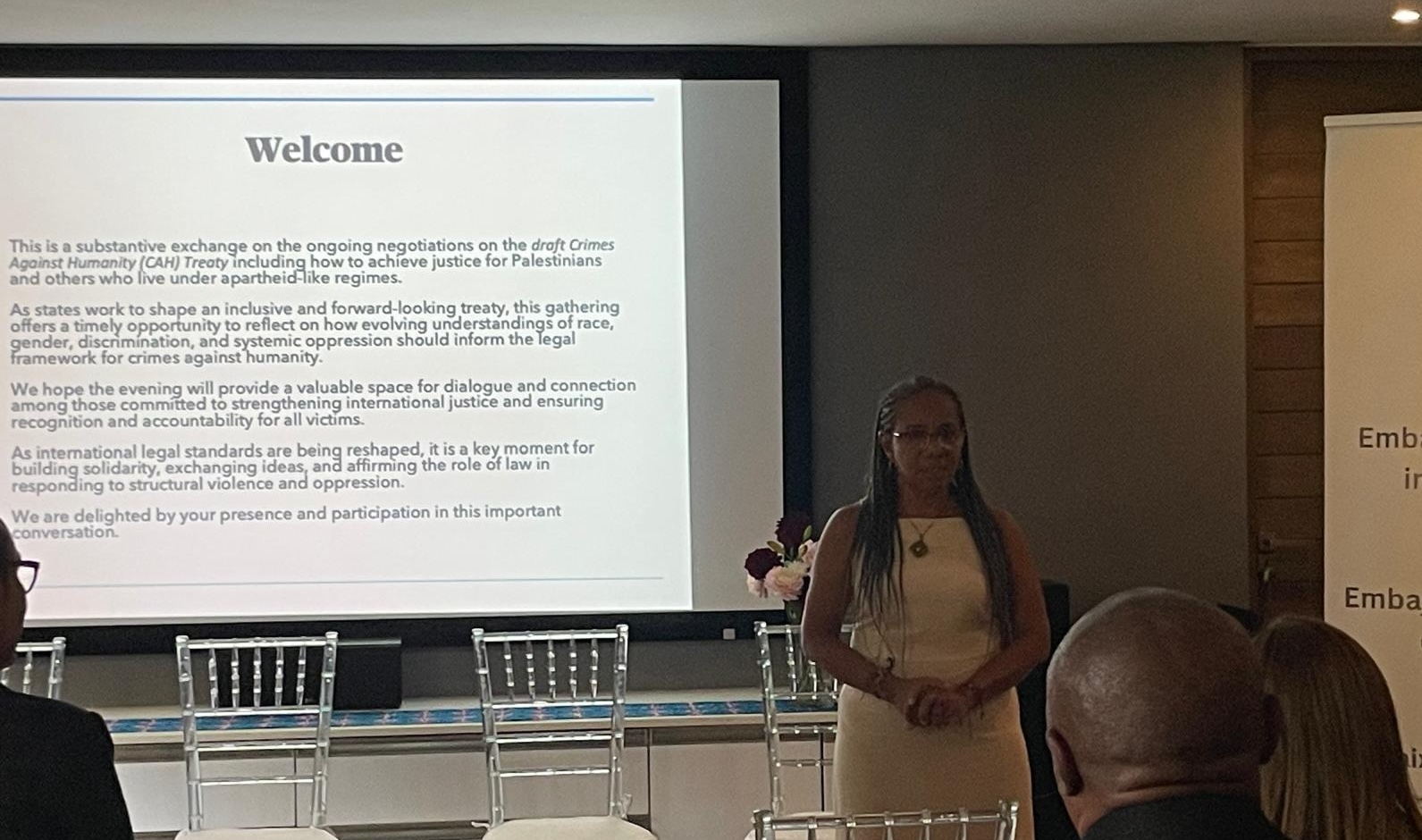
Given South Africa’s key role in the global struggle for justice, freedom and democracy, on February 19th, the Colombian Embassy hosted a dialogue in Pretoria with the organization MADRE on modernizing the definition of apartheid in the new crimes against humanity (CAH) treaty being negotiated at the UN.
The draft treaty’s definition of apartheid, copied from the Rome Statute, was crafted in a different era. It is defined as inhumane acts committed to maintain a regime of oppression and domination by a racial group over any other racial group. It contains an outdated understanding of race, one grounded in biological characteristics rather than social construction. It also removes the context of colonialism from the Apartheid Convention’s original formulation.
Today, we recognize that gross inhumane acts of oppression and domination are often conducted on the grounds of intersecting forms of discrimination and intolerance that can include race, gender, class, place of origin and religious beliefs as socially constructed notions of inferiority, dysfunctionality or positionality threatening to “normal” societies.
Race and gender are so often the primary foundation for discrimination. The Special Jurisdiction for Peace, a transitional justice body in Colombia, recently recognized this in its decisions finding crimes against humanity were committed against Afro-descendant and Indigenous women and LGBTQI+ people on the grounds of both gender and ethnicity or racism. Those victims’ suffering carries echoes of that of Black women living under apartheid in South Africa and Namibia. These historical and modern contexts also call for recognizing the role of colonialism in many discriminatory crimes against humanity.
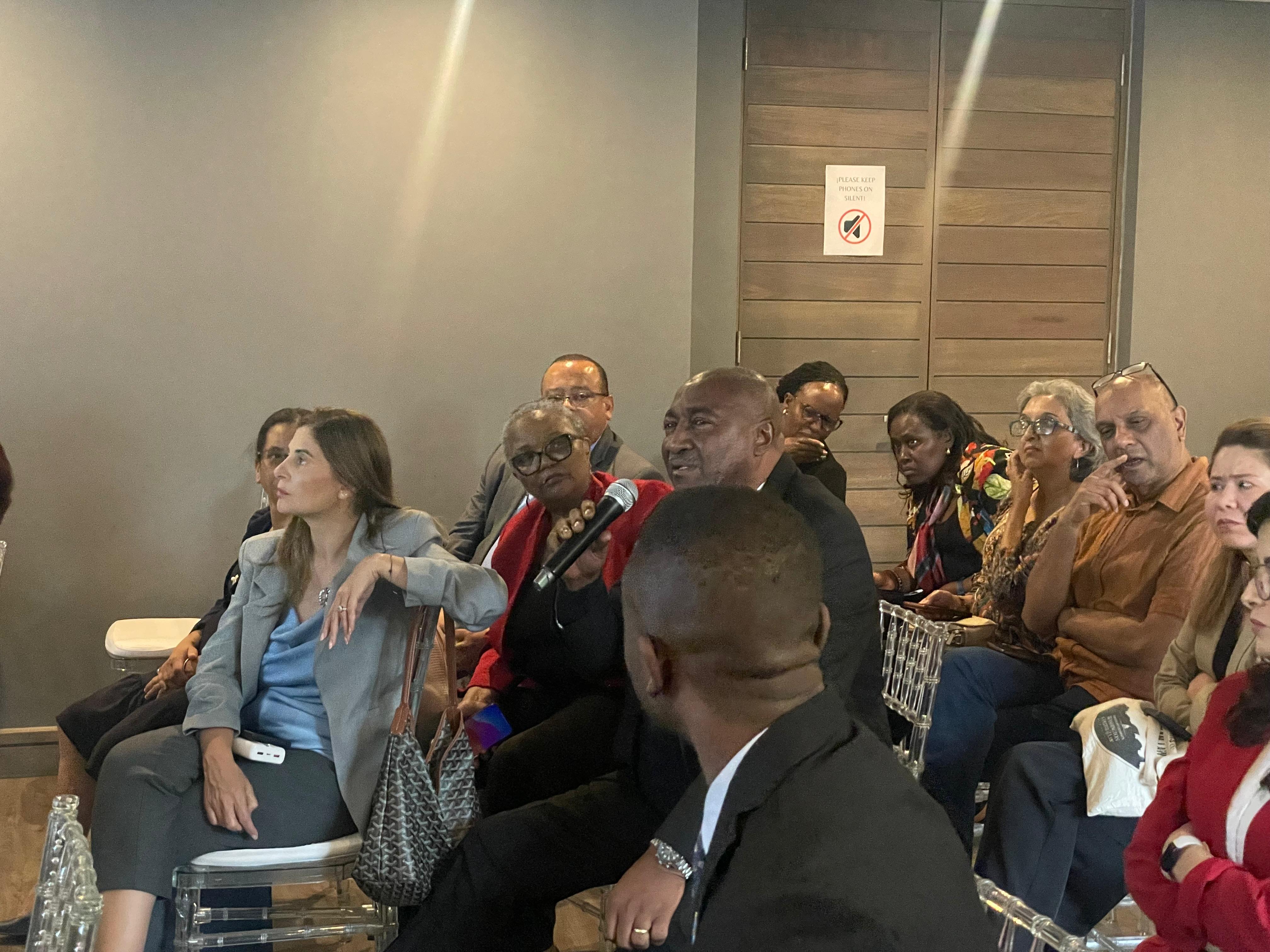
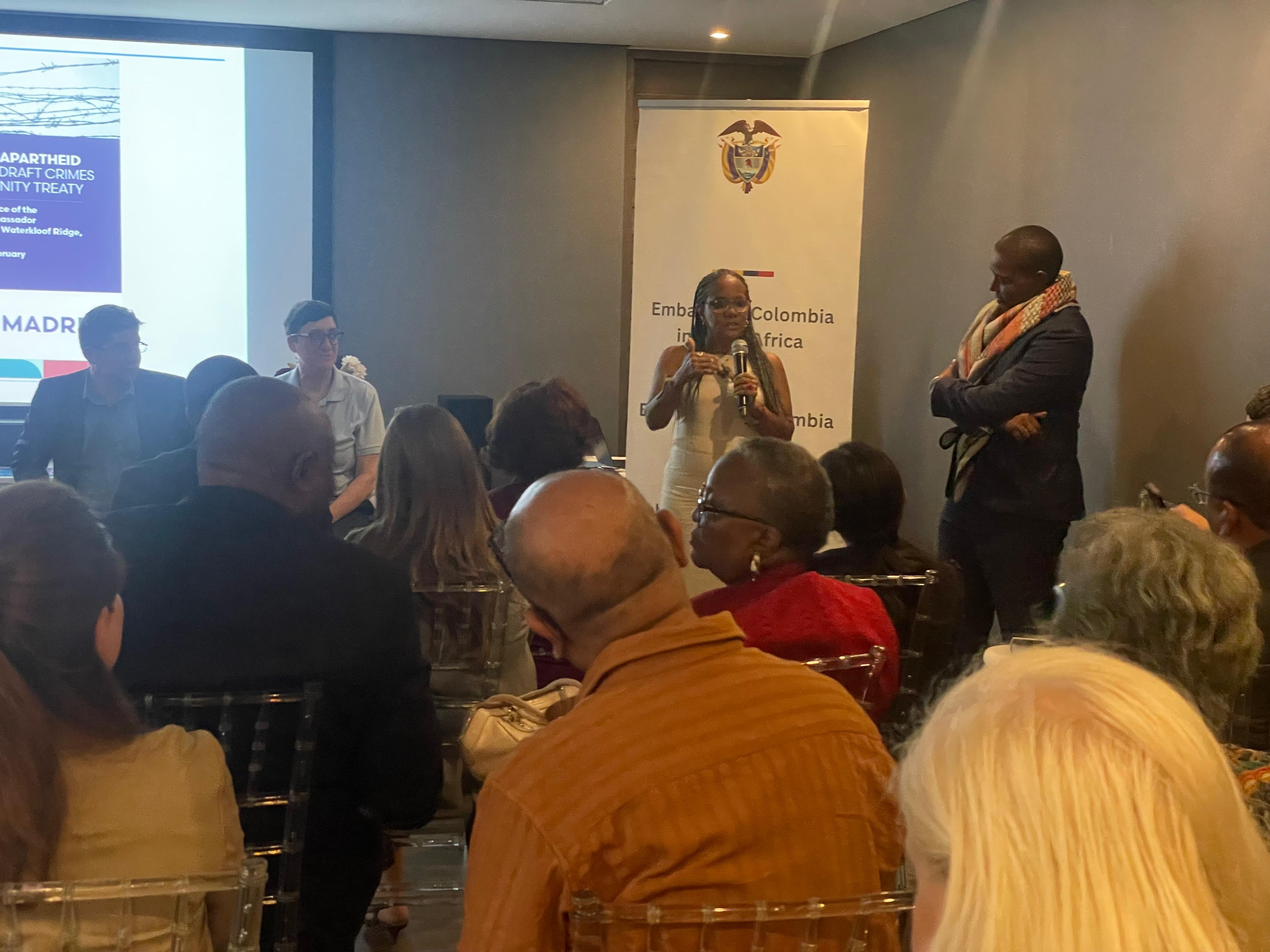
The event on February 19, Recognizing Apartheid Victims in International Criminal Law and the Draft CAH Treaty,convened diplomats, legal experts, UN officials, civil society leaders, and scholars. They came “to exchange perspectives on how the CAH Treaty process can better reflect contemporary oppressive regimes that discriminate based on racism as well as gender and intersecting identities”.
Supported by testimonies from grassroots leaders from Palestine, South Africa and Afghanistan, this informal but substantive dialogue provided the opportunity to share a suggested definition of apartheid that draws on recommendations from South African leaders and organizers during a workshop conducted by MADRE and the Foundation for Human Rights on February 17 and 18. That proposed definition was as follows:
“…inhumane acts … committed in the context of an institutionalized regime of oppression and domination by one group over any other group or groups, based on race, gender or other forms of colonialist discrimination and committed with the intention of maintaining that regime”
The group at the February 19 convening also discussed a definition that would recognize apartheid’s colonial roots while utilizing the language of “grounds” from international criminal law. UN experts also later refined the language from “…colonialist..” to “…colonial” to better situate potential future grounds within colonial contexts, and embedded in colonial structures, rather than merely in ideology. The full proposed definition reads as follows:
“…inhumane acts … committed in the context of an institutionalized regime of oppression and domination by one group over any other group or groups, on race, gender, or other grounds of colonial discrimination and committed with the intention of maintaining that regime.”
Updating the definition of apartheid in the context of modern manifestations of discriminatory oppression and domination, typified in the case of Palestine, would enhance this international legal tool. It would ensure recognition for victims; providing legal recourse for accountability and for restorative and reparatory justice. Furthermore, through inclusion in the treaty on preventing and punishing crimes against humanity, it would provide a means to prevent colonialism and apartheid from happening again. Non-repetition must be a key goal of the treaty. An updated definition of apartheid could bring together the Rome Statute and 1973 Apartheid Convention in a single international legal blueprint to achieve an important tool in the long fight against all forms of oppression, discrimination, xenophobia and related intolerance, as envisioned at Durban in 2001.
The discussion underscored the need to bring this dialogue to broader audiences for better comprehension. Experts on the matter, such are the people of South Africa and Namibia, must be meaningfully included in the consultations and advocacy in relation to the draft treaty. Equally important, it laid bare the need to address issues of treaty implementation and mechanisms for accountability.
The Embassy of Colombia in South Africa is profoundly grateful to Lisa Davis, Kirby Anwar and Wendy Isaack of MADRE; Randa Siniora of Women’s Center for Legal Aid and Counseling, based in Palestine, Zaid Kimmie of the Foundation for Human Rights and Artemis Akbary of Afghan LGBTQI+ Organization, as well as the diplomats, scholars, journalist and other civil society that joined this dialogue. We also would like to encourage Embassies of other States supporting the draft CAH Treaty to open their doors for further discussions that contribute to shared learning in the development of this critical global concern.
We invited you also to read more on this issue from MADRE: https://www.madre.org/modernizing-the-definition-of-apartheid-in-the-draft-crimes-against-humanity-treaty/ and from the Diplomatic Society: https://www.thediplomaticsociety.co.za/5538-from-symbolism-to-sanction-will-redefining-apartheid-deliver-justice
2.27.2026
#ColombiaInSouthAfrica